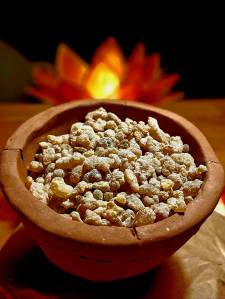
Copal – Aromatisches Harz (copalli in Nahuatl)
It comes from trees of the Bursera genus that grow in Mexico and Central America. Its qualities were well known and widely used by pre-Hispanic cultures for ritual, ceremonial, festive, therapeutic, medicinal purposes, and as a binder. Copal is harvested from the bark of these trees.
Connection with Deities
The ancient Mexicans considered copal a protective god; they called it Iztacteteo, which means “white god,” referring to the white smoke it produces when it burns. Copal was seen as food and offering for the gods. The smoke was a vehicle for communication between deities and humans.
It was strongly associated with fertility and water, which is why Tláloc was sometimes depicted with a bag of copal.
In the sixth month, Etzacualiztli, Tláloc was honored and offered aromatic white smoke.
 expectante.net